

A polished exterior, a spotless interior and an attractive price tag can make a pre-owned boat look like a can’t-miss opportunity. But when buying a used boat, what you see at the dock is only half the story.
Behind the gelcoat, beneath the deck and inside the engine room are the critical systems that dictate performance, safety and the true cost of ownership.
Instead of asking: “Does it look good?”
Start asking: “What condition is it really in?”
Here is a used boat inspection checklist covering the 7 core areas to evaluate before signing on the dotted line.
1. Dig into the Boat’s History
Two boats of the exact same model year can be worlds apart depending on how they were used, stored and serviced. Before stepping aboard, request details on:
- Previous ownership and usage patterns
- Complete maintenance and service records
- Engine hours
- Documented repairs or structural work
- Custom modifications or aftermarket upgrades
- History of groundings, impacts or insurance claims
- Storage conditions (for example winterized, rack-stored or kept in the water year-round)
How a boat spent its off-seasons matters as much as how it was used in summer. Our end-of-season boat maintenance checklist shows what good storage care should look like.
2. Inspect the Structural Integrity
The hull and superstructure demand thorough scrutiny. Good looks don’t cover up underlying stress. Keep an eye out for:
- Spider cracks, gelcoat crazing or unusual stress marks
- Evidence of past patch jobs or structural repairs
- Osmotic blistering below the waterline
- Soft spots, spongy flooring or flex on the deck
- Damage along the keel, transom and hull-to-deck joints
Note: A previous repair isn’t an immediate dealbreaker. What matters is what happened, who repaired it, and whether it was restored to structural standards.
3. Check Under the Engine Hatch
A pristine helm won’t save you from a neglected engine compartment. Inspect:
- Engine hours vs. service milestones
- Fluid condition (oil, coolant, gear lube)
- Belts, hoses and raw water impellers
- Engine mounts and alignment
- Transmission and drive units
- Propeller, shaft and cutless bearing condition
- Steering linkage and hydraulic systems
- Bilge pump operation and cleanliness
- Active leaks, corrosion or excessive rust
4. Audit the Electrical Systems
Modern boats rely heavily on complex electrical systems. Neglected wiring is both a reliability problem and a safety risk. Test and review:
- Battery banks, switches and charging systems
- Wiring condition (watch for corrosion or non-marine-grade wiring)
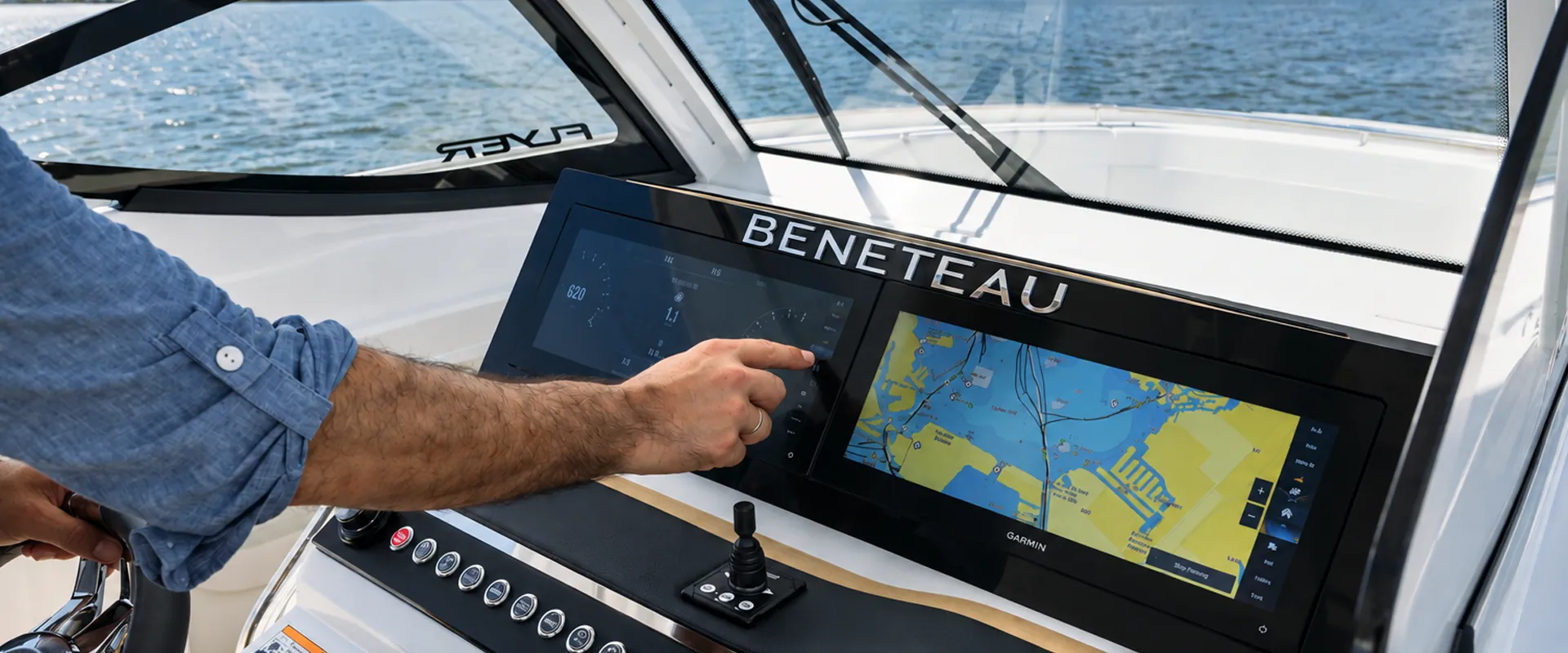
- Navigation instruments, radar and VHF radios
- Multifunction displays (MFDs) and gauges
- Switch panels and circuit breakers
- Running lights and interior lighting
5. Test Onboard Comfort and Utility Systems
Living systems affect both your day-to-day experience and your long-term maintenance budget. Verify the operation of:
- Air conditioning and heating units
- Auxiliary generators
- Fresh water pumps and water heaters
- Black water / head systems and holding tanks
- Fuel delivery and filtration systems (for example Racor filters)
- Refrigeration and galley equipment
- Required safety equipment on board
6. Value Maintenance Over Age
Age is just a number; maintenance is the true metric. A well-serviced 15-year-old boat will often outshine a 5-year-old boat that suffered from deferred maintenance.
Stop asking: “How old is it?”
Start asking: “How well has it been maintained?”
7. Never Skip the Sea Trial
A boat can hide plenty of flaws while tied safely to a cleat. The real test happens on open water. Use the sea trial to evaluate:
- Engine responsiveness and hole-shot acceleration
- Smoothness of gear engagement
- Steering precision and handling at speed
- Vibration, misalignment or unusual noises
- System performance under load (temperature, oil pressure, voltage)
The Golden Rule: Get a Professional Marine Survey
Even the most experienced boaters can miss subtle signs of moisture intrusion, structural fatigue or mechanical failure.
Hire a credentialed marine surveyor (SAMS or NAMI certified) and a dedicated marine mechanic. Their job isn’t to kill the deal; it’s to make sure you know exactly what you’re buying.
Frequently Asked Questions
What should I check before buying a used boat?
Check seven areas: the boat’s history and service records, hull and structural integrity, the engine compartment, electrical systems, onboard comfort and utility systems, overall maintenance quality, and performance during a sea trial. Finish with a professional marine survey.
Is an older boat with good maintenance better than a newer neglected one?
Often, yes. A well-serviced 15-year-old boat can outperform a 5-year-old boat that suffered from deferred maintenance. Ask how well the boat has been maintained, not only how old it is.
Is a previous repair a dealbreaker?
Not necessarily. What matters is what happened, who carried out the repair, and whether the boat was restored to structural standards. A marine surveyor can confirm the quality of the work.
Do I need a marine survey when buying a pre-owned boat?
Yes. A certified marine surveyor and a dedicated marine mechanic can detect moisture intrusion, structural fatigue and mechanical issues that even experienced boaters miss.
Final Thoughts
The smartest boat purchases aren’t made at first glance. They are made through thorough inspection, accurate history and clear-eyed evaluation. Two boats can look identical at the dock but offer completely different ownership experiences on the water.
Weighing a pre-owned boat against a new one? Browse the Beneteau, Lagoon and Wellcraft boats available through Montazah Group, or talk to our team for honest advice before you buy. New to boat ownership in Egypt? Read the biggest myth about owning a boat in Egypt.