

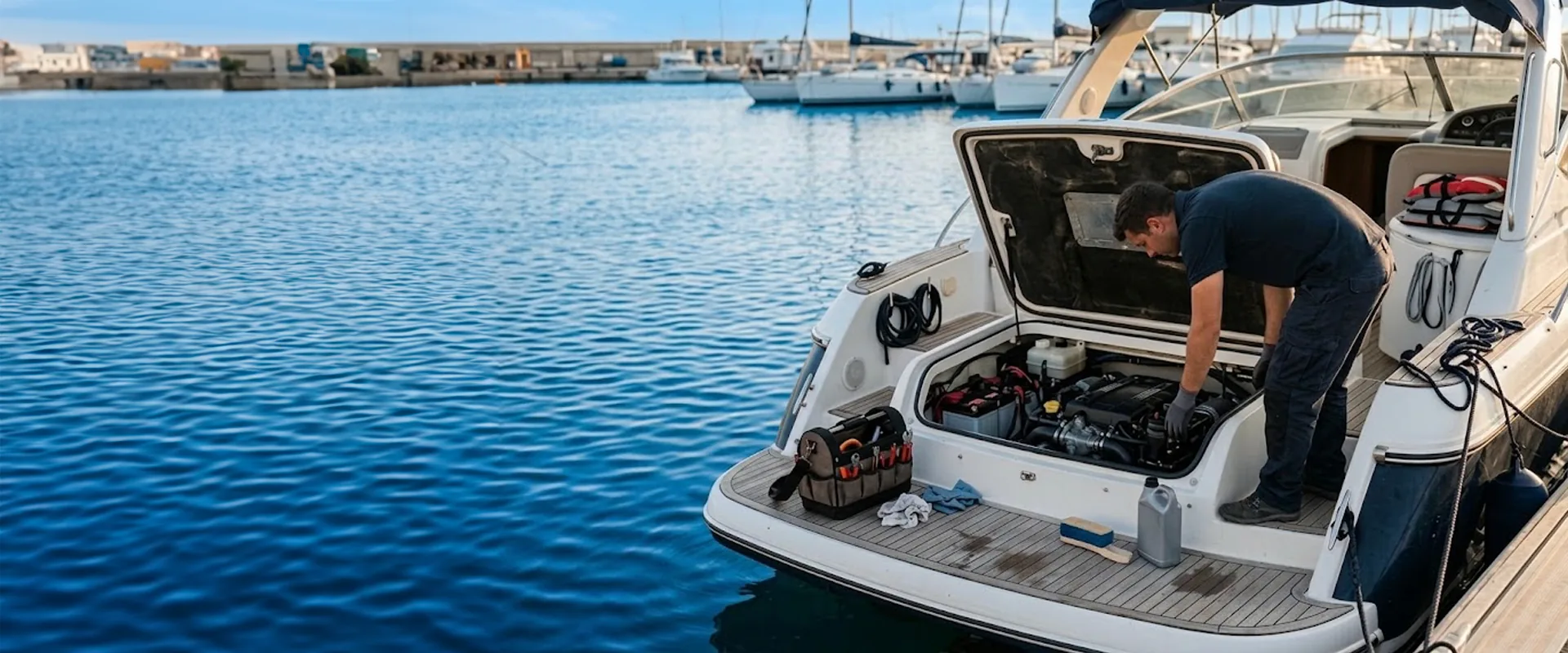

The summer season on the water may be winding down, but for boat owners, the work isn’t quite over. Whether your vessel is staying docked at the marina or being hauled back home to Cairo, how you handle end-of-season boat maintenance dictates how smoothly your first trip next summer will go.
A few hours of structured maintenance today prevents corrosion, battery drain, engine failure, and costly spring repairs.
Option A: If Your Boat Is Staying in the Water
Wet storage requires active protection against saltwater, marine growth, and humidity.
- Inspect underwater components: Check the hull, propellers, shafts, and trim tabs for marine build-up or wear. Replace sacrificial anodes if they are worn down by 50% or more.
- Service the engine and fuel: Check oil levels, filters, belts, and coolant. For diesel engines, inspect fuel quality and drain water separators to prevent fuel contamination over the off-season.
- Maintain battery health: Batteries discharge naturally over time. Test voltage, clean terminal corrosion, and ensure automatic trickle-charging systems are operational.
- Test bilge systems and seacocks: Verify that automatic float switches and manual bilge pumps are fully functional. Inspect all through-hull fittings, seacocks, and hoses for signs of stress or slow leaks.
- Control interior moisture: Saltwater and humidity breed mold. Clean and dry all cabin surfaces, remove damp gear, and ensure adequate cabin ventilation or use moisture-absorbing tubs.
Option B: If Your Boat Is Coming Out of the Water
If you are hauling out and transporting your boat back home or to dry storage, prep starts before transit.
- Immediate hull wash-down: Pressure-wash the hull as soon as the boat leaves the water. Salt and marine growth are exponentially harder to remove once dried onto the gelcoat.
- Drain plumbing and water systems: Empty freshwater tanks, water heaters, and internal lines to eliminate stagnant water and head odors.
- Stabilize fuel and electricals: Treat fuel with long-term stabilizers, turn off main battery switches, or remove batteries entirely to store in a temperature-controlled space.
- Cover with ventilation: Install a durable, UV-resistant cover. Ensure it is tightly fitted to keep out dirt and rain, but ventilated enough to prevent condensation underneath.
- Audit safety gear: Check expiration dates on flares, fire extinguishers, and first-aid supplies. Inspect life jackets for wear and replace expired items now. Don’t wait for next summer’s first outing.
The Final Step: Log Your Off-Season Baseline
Before locking up for the season, create a digital record or snapshot of your boat’s current state:
- Engine hours and fuel/fluid levels
- Maintenance completed and parts replaced
- Battery charge levels
- Identified repairs needed before next spring
Protect Your Boat Before Next Season
Taking time for proper end-of-season maintenance isn’t just about keeping your boat looking good. It’s about protecting a major asset. Address the details now, so your opening day next season is spent enjoying the water, not fixing what was left behind.